Study Strategies

Tuesday 10 November 2026

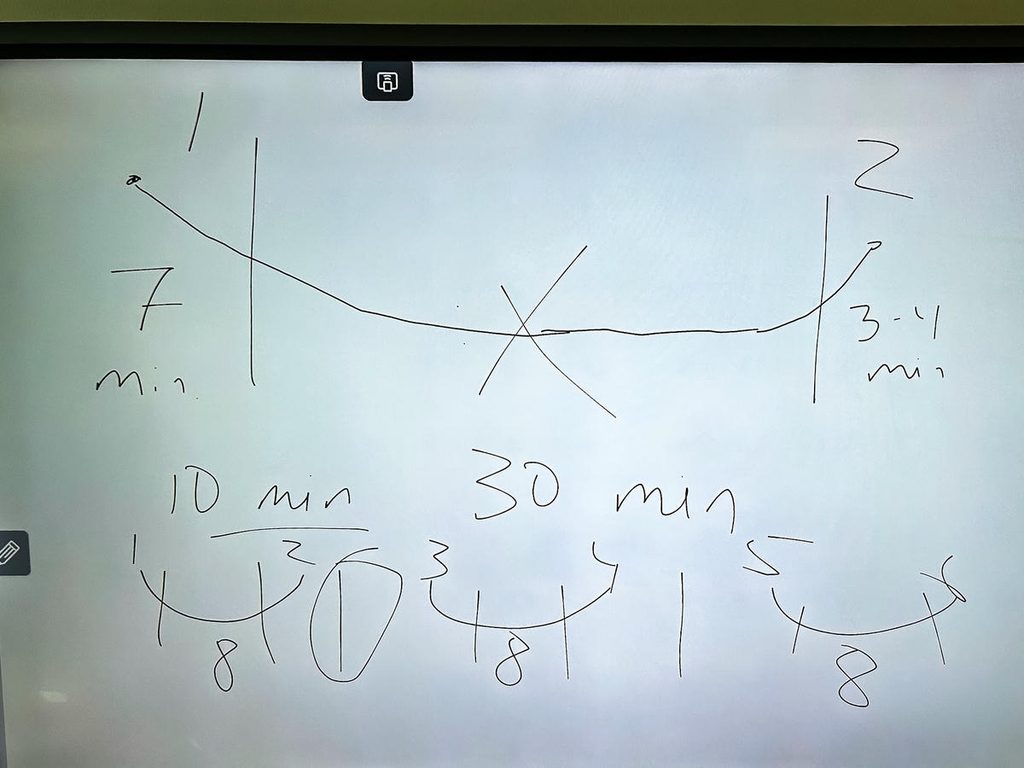
Students today and yesterday continued with our unit on effective study and test taking skills. After reviewing how to transform fixed-minded statements into growth-minded statements, we looked at the importance of taking breaks in studying: our attention is at its highest at the start and toward the end of a studying/focus session, so the more starts and ends we can create, the more we increase our studying effectiveness.
Afterward, we began our first study/test-taking strategy: the importance of active studying over passive studying. Our students used some Veterans Day vocabulary as an experiment to compare the results of active and passive studying. Half the class used the old fashioned, ineffective passive studying method of simply reading and rereading the material (in this case, a list of vocabulary terms) in the hopes that some of it will seep into our thinking.
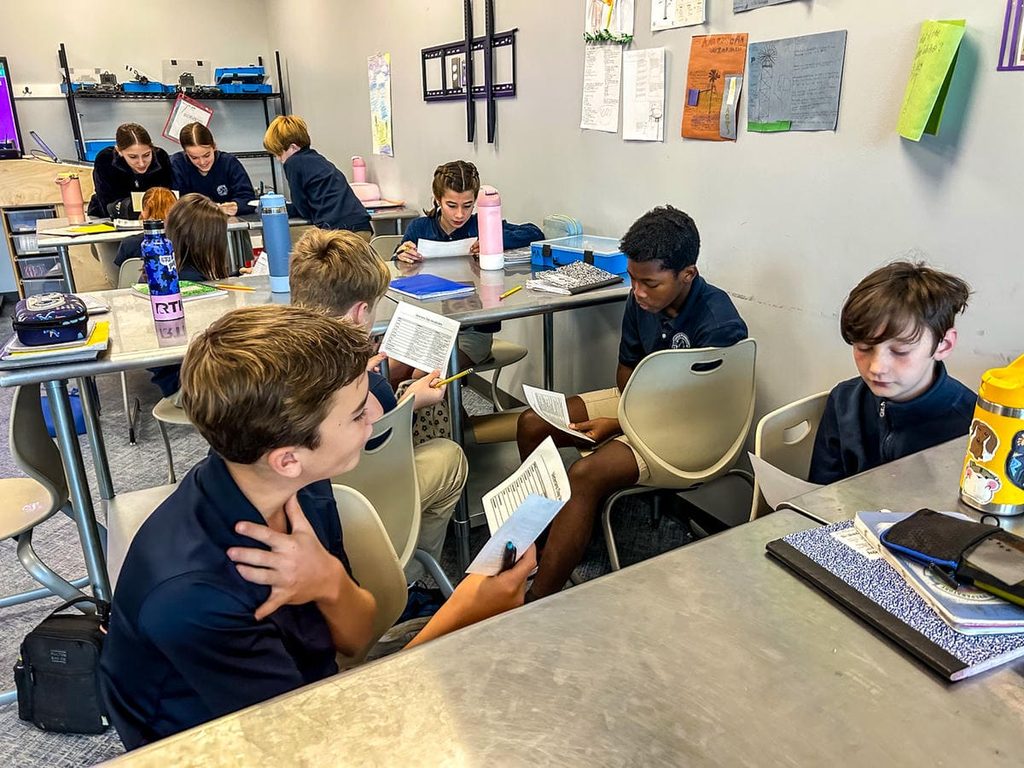
The other half used our first active studying technique: quizzing with a partner. Half the class worked with a partner to learn the vocabulary words actively, and the other half used the old, passive read and reread and reread and reread method. Afterward, we took a short quiz on the terms to see who had learned them better. (And it was trickier than that sounds because we counted spelling.) In every class, the students who employed active studying did slightly better than the passive studying students.

Today's Journal Prompt

Imagine you have a big test coming up. How would you prepare? What are some steps you would take to make sure you’re ready? Don’t simply write, “I would study.” How would you study? What would your studying look like? How would you feel about such a high-stakes test?

Mr. Scott's Journal Entry

The biggest test I ever took in my life was the GRE before I went to graduate school in the late 1990s. I'm not sure what it consists of now, but at the time, it was a three-part test, with a mathematics section, a verbal portion, and a set of analytic (logical reasoning) questions. Each section was worth 800 points making a coveted perfect score 2400 points. My goal was to make 2000 or above, so I worked hard to prepare.

I spent months reading preparation books that explained what types of questions I would face and strategies for tackling each type. I learned from vocabulary lists the prep books supplied, and I did more math review than I thought healthy. Much of that time I spent going over practice tests, usually applying the actual time limit I knew would be on the actual test. Occasionally, I would forget about the time limit and simple work through the questions. On one occasion doing this, I got a perfect score for the test, but I spent almost four hours taking the test, which (as I best recall) had a two-hour time limit.

When I went to take the test, I had to take a computer-administered test, which did not worry me much at all. The first question came up, and it was an analytic section. I worked the question, submitted the answer, and prepared mentally for the next analytic question. When a verbal question popped up, I was confused and a bit frustrated, but I thought perhaps it was just a miscategorized question. When a math question followed, I realized that instead of three distinct sections, all three sections were scrambled.

So I could have prepared better by doing a bit more research about how the test would be administered.

0 Comments

Submit a Comment

Your email address will not be published. Required fields are marked *