
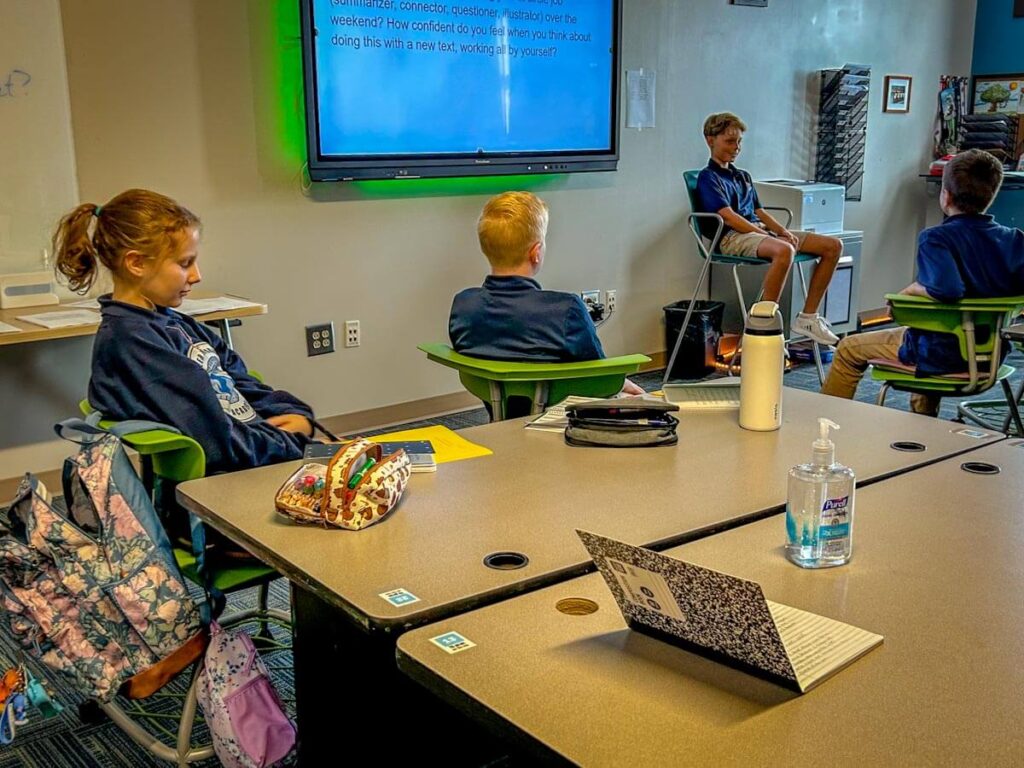
We combined all our work this week (the story, our academic skills of observing and then inferring) to make the necessary inferences that Langston Hughes expects readers to make in "Thank You, Ma'am." We looked at four passages and made inferences about them:
Passage 1
When she got to her door, she dragged the boy inside, down a hall, and into a large kitchenette-furnished room at the rear of the house. She switched on the light and left the door open. The boy could hear other roomers laughing and talking in the large house. Some of their doors were open, too, so he knew he and the woman were not alone. The woman still had him by the neck in the middle of her room.
Passage 2
The woman said, “Um-hum! You thought I was going to say but, didn’t you? You thought I was going to say, but I didn’t snatch people’s pocketbooks. Well, I wasn’t going to say that.” Pause. Silence. “I have done things, too, which I would not tell you, son—neither tell God, if he didn’t already know. So you set down while I fix us something to eat. You might run that comb through your hair so you will look presentable.”
Passage 3
In another corner of the room behind a screen was a gas plate and an icebox. Mrs. Jones got up and went behind the screen. The woman did not watch the boy to see if he was going to run now, nor did she watch her purse which she left behind her on the day-bed. But the boy took care to sit on the far side of the room where he thought she could easily see him out of the corner of her eye, if she wanted to. He did not trust the woman not to trust him.
Passage 4
“If I turn you loose, will you run?” asked the woman.
“Yes’m,” said the boy.
We used these passages to determine that Ms. Jones exhibited a few qualities of an effective leader:
Period 1
Doesn’t assume but instead gathers information and then makes a decision/inference
Period 2
- Shows compassion
- Teaches responsibility
- Brings out the best in someone
- Sacrifices for others
- Doesn’t make assumptions
- Shows trust
Period 3
- Doesn’t make assumptions but instead observes and then infers (as needed)
- Shows trust
- Shows understanding
- Shows patience
- Shows compassion
Period 4
- Trusting
- Mindfulness
- Sharing
- Smart
- Does not make assumptions but makes inferences based on observations
- Kindhearted
- Trustworthy
- Shows compassion
Period 5
- Shows empathy to those who make bad decisions
- Is trustworthy
- Trusting
- Caring
- Takes charge of situations
- Doesn’t make assumptions but uses observations to make inferences
Period 6
- Is wise
- Caring
- kindness/compassion
- Generous
- Shows grace
- Trustworthy
- Shows justice/is fair
- Doesn’t make assumptions but uses observations to make inferences
We will use this in our homework.
0 Comments